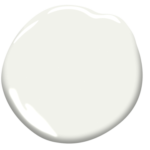
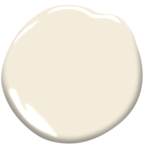
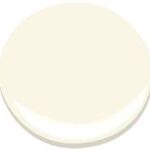
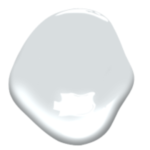
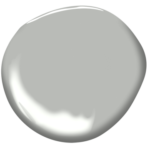
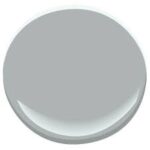
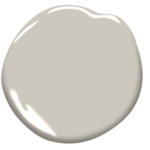
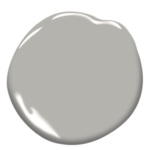
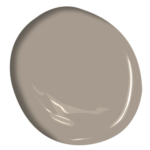
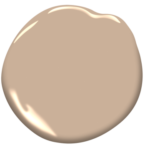
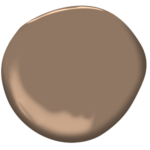
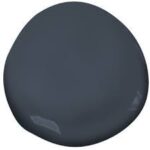
The below Benjamin moore Colors are included in all default estimate pricing
Cool whites
Chantilly Lace
White Heron
Super White
Warm whites
White Dove
Cloud White
Simply White
Warmer whites
Linen White
Swiss Coffee
Mayonnaise
Blacks
Gray
Onyx
Soot
Grays
Gray Cloud
Gray owl
Coventry Gray
Marina Gray
Smoke gray
Taupe - Grays
London Fog
San Antonio Gray
Ashley Gray
Browns
Cream Soda
Spanish Brown
Stone Brown
Blues
Admiral Blue
Hale Navy
Kensington blue
Gentleman's Gray
Greens
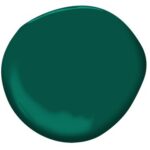
Hunter green
Absolute Green
Jack pine
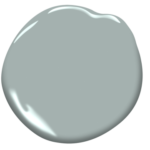
Kentucky haze
Choosing a color:
When choosing your color(s), lighting is one of the most important details to consider. We can color & finish samples at our shop, but it’s important to understand that colors viewed there will look different in your own space.
The same exact color can appear different depending on the time of day (light & shadow), and the type of lighting used. For example; 2700K bulbs can make a white color look warm, creamy and soft. But 5000k bulbs will make that same color appear brighter, and more blue in tone.
So we always recommend viewing color samples in the project location (not in our shop or a paint store) before making a decision.
They don’t make a mess like painting does, and the samples are larger than fan cards from paint stores (those are too small to be sure of how the color will appear on a larger surface area).
So we advise ordering 2-3 of your favorites colors from there to put up in your space/ Then give it a few days to see the color in various lighting settings, and let us know your choice!
We’ll just need the paint name and code; e.g. Chantilly Lace 2121-70.
Sheen:
Note; unless otherwise discussed all colors come in a more matte sheen due to ease of maintenance, popularity and aesthetics.
This sheen is what you’ll see in almost all of our before/after pictures on the website.
Lower sheens tend to look “cleaner” because their finish is more forgiving to fingerprints, dust, etc and requires less cleaning.
This sheen is close to what you’d see when looking at kitchen cabinet door samples out & about in retail locations.
If you are set on a “shiny” option, please consult for that – we can do it, but it is extra, and you’ll need to understand it will require wiping down regularly due to fingerprints (similar to a stainless steel fridge; every time you touch it; you’ll see fingerprints and smudges).
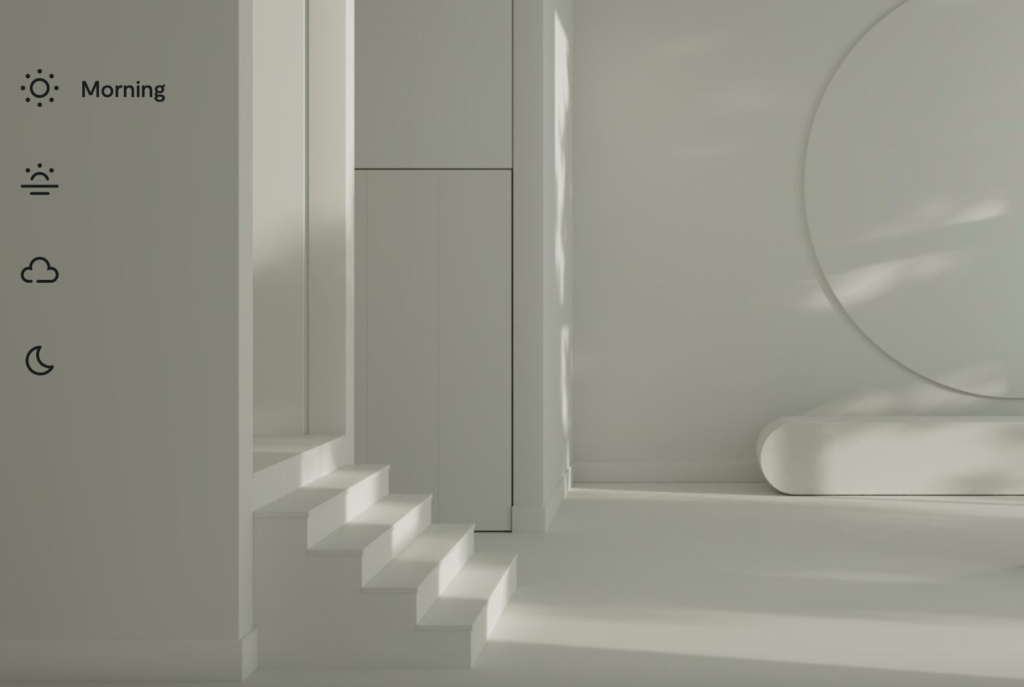
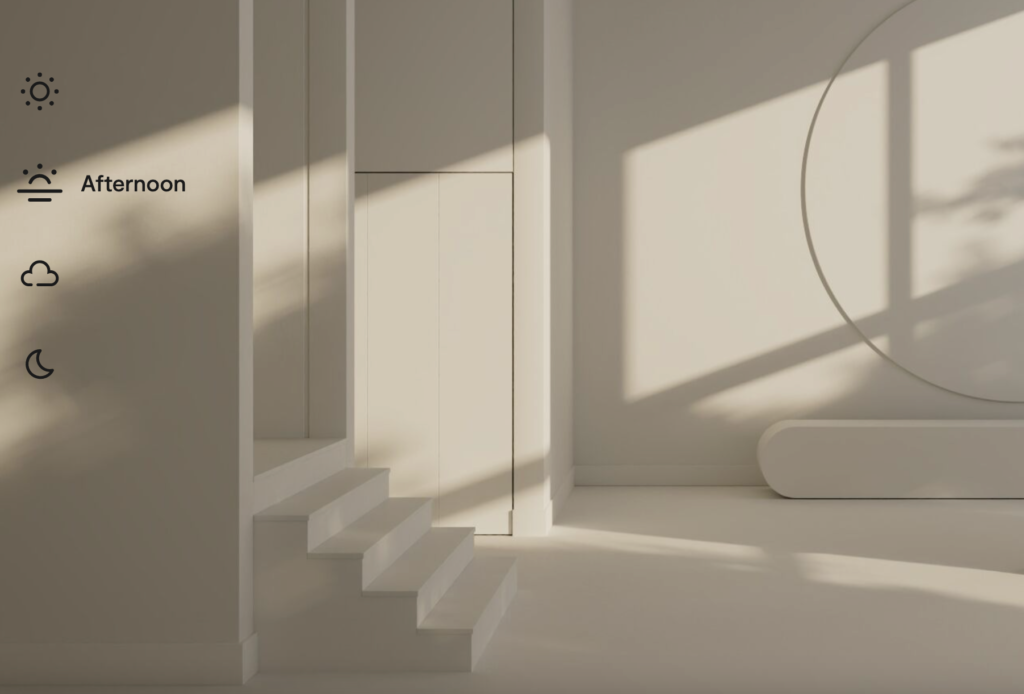
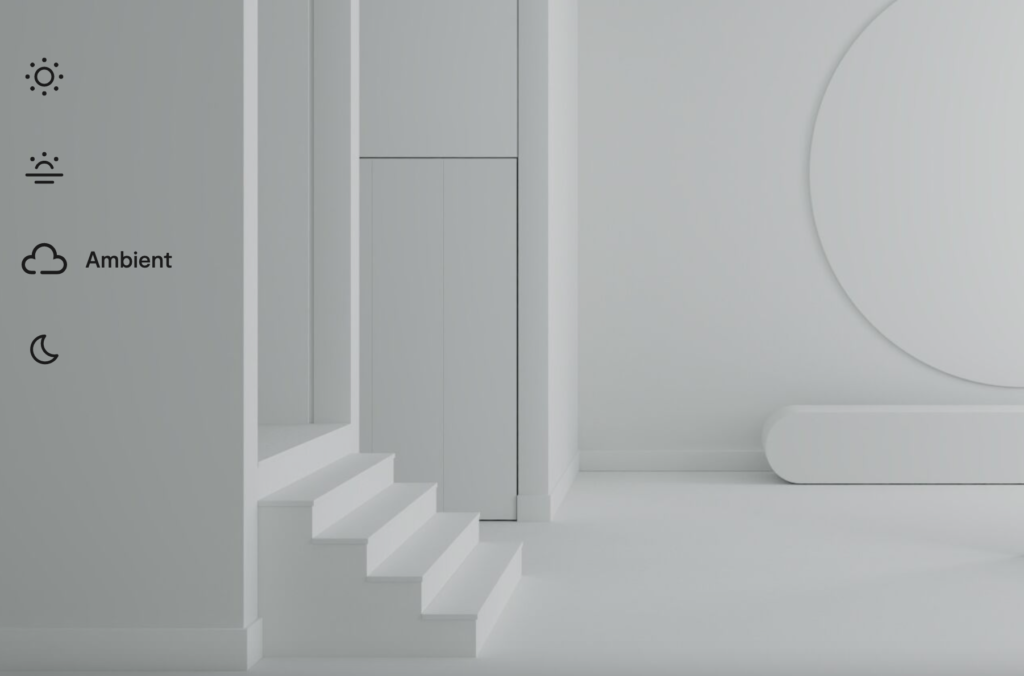
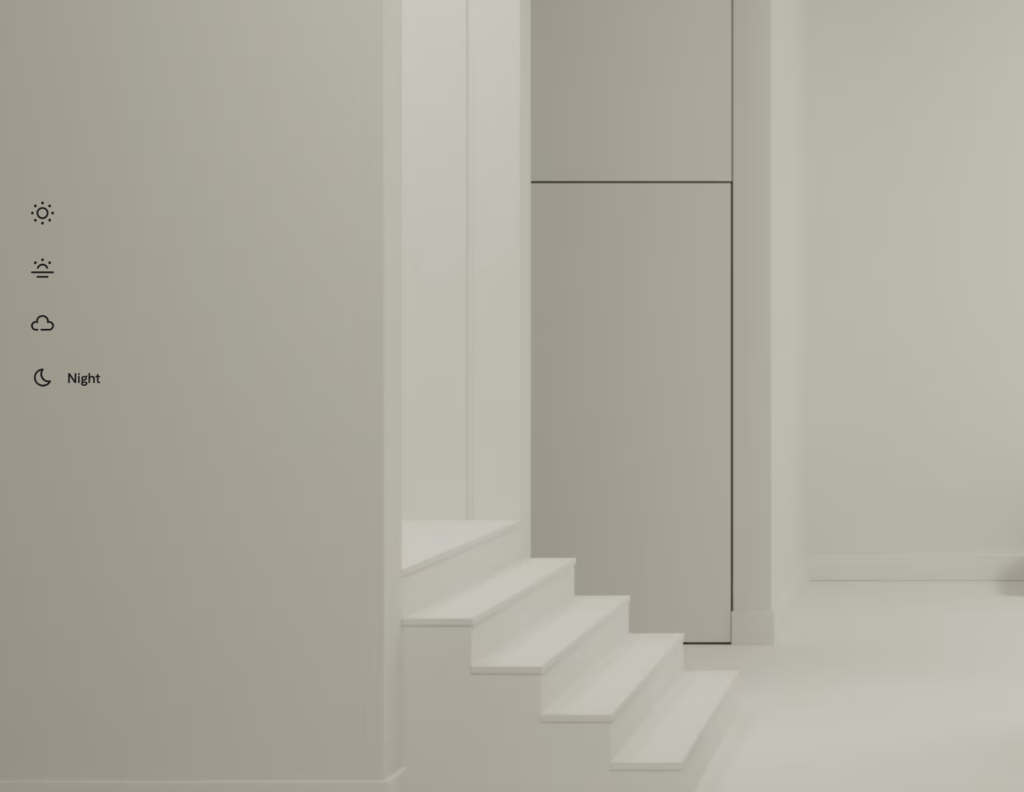
Below, you’ll see an example where the same color (Chantilly Lace) looks different depending on the time of day and type of lighting.
Chantilly Lace in Morning light
Chantilly Lace in Afternoon lighting
Chantilly Lace in Ambient light
Chantilly Lace in Night lighting
Whether you want Drama or subtlety, here are our Tips on choosing the right color
Where to start
A good place to begin is with the basic color wheel.
Colors that appear close to each other on the wheel are considered analogous, so they tend to work well together, while still allowing one color to stand out.
On the other hand, colors that appear opposite are considered complementary. As a result, they can create a balanced look with more contrast and visual interest.
Cool colors, such as blues, greens, and purples, can help a room feel larger, calmer, and more open.
Meanwhile, warmer colors, such as yellows, oranges, and reds, often feel more vibrant, cozy, and inviting.
You can also stay within the same general shade of color. For instance, a color may be bright, muted, dark, soft, warm, or cool. Because of this, even a “simple” white or gray can create a very different feeling depending on the undertone.
Farmhouse & Traditional neutrals
Look for Inspiration....
Start with a dream room that you genuinely love. For example, you may have seen a kitchen on HGTV, in a magazine, on Pinterest, or in a designer’s portfolio.
Then, look carefully at what you like most about the space. Is it the contrast between the cabinets and countertops? Is it the warmth of the color? Or, is it the clean and modern feeling of the overall palette?
Once you understand what draws you to that inspiration image, it becomes much easier to choose a cabinet color that gives your own space the same feeling.
2. Keep it neutral
While it can be tempting to make a bold statement with furniture, walls, or decor, kitchens usually work best with a more neutral cabinet color. This is because neutral cabinets give you more flexibility with countertops, hardware, lighting, art, and accessories.
In addition, a neutral cabinet color can make it easier to update the room over time without repainting or replacing the cabinets. However, neutral does not have to mean boring. There are many tones, hues, and sheens to choose from, even within different shades of white.
For instance, a bright true white often has a cleaner, more modern feel. By comparison, a warm vanilla white can create a softer farmhouse or traditional look.
3. Use a color theme throughout your entire home.
One of the easiest ways to choose paint colors is to use a common color theme throughout your home. However, this does not mean every room needs to be painted the same color.
Instead, think about using different shades, tones, or undertones that relate to one another. This approach is especially helpful in rooms that connect, share a wall, or can be seen from the same viewpoint.
As a result, your home can feel more intentional and cohesive while still allowing each room to have its own personality.
4. Still not sure what to pick?
If your main goal is strong resale value, whites and off-whites are usually a safe choice. Currently, some of the most popular cabinet colors include Sherwin-Williams Alabaster and Benjamin Moore White Dove. Both are slightly warm whites, so they tend to work well with many different countertops, floors, and design styles.
For a brighter look, many homeowners also like crisp whites such as Sherwin-Williams Snowbound and Benjamin Moore Chantilly Lace. After white and off-white tones, popular cabinet colors often include grays, tans, and dark browns.
Ultimately, the best choice depends on the style of your home, the lighting in your space, and the overall feeling you want the room to have.
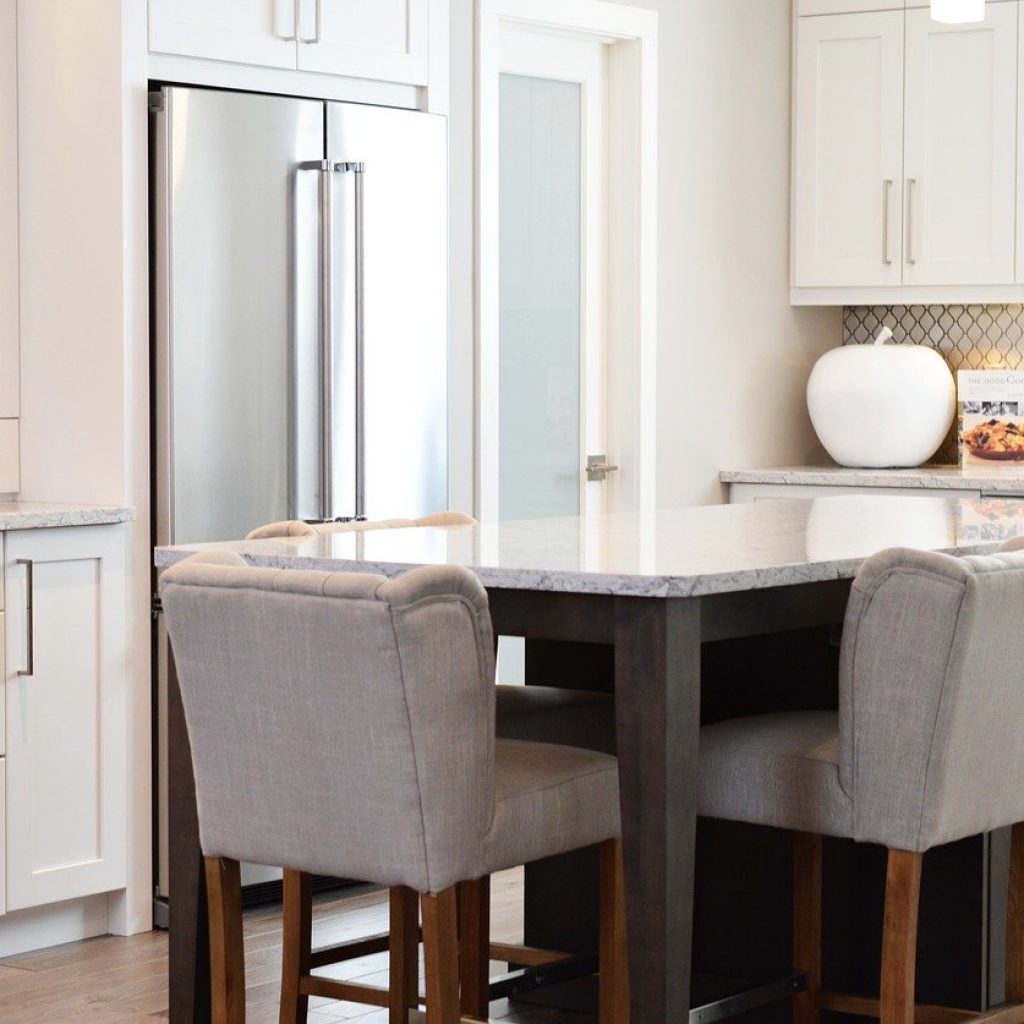
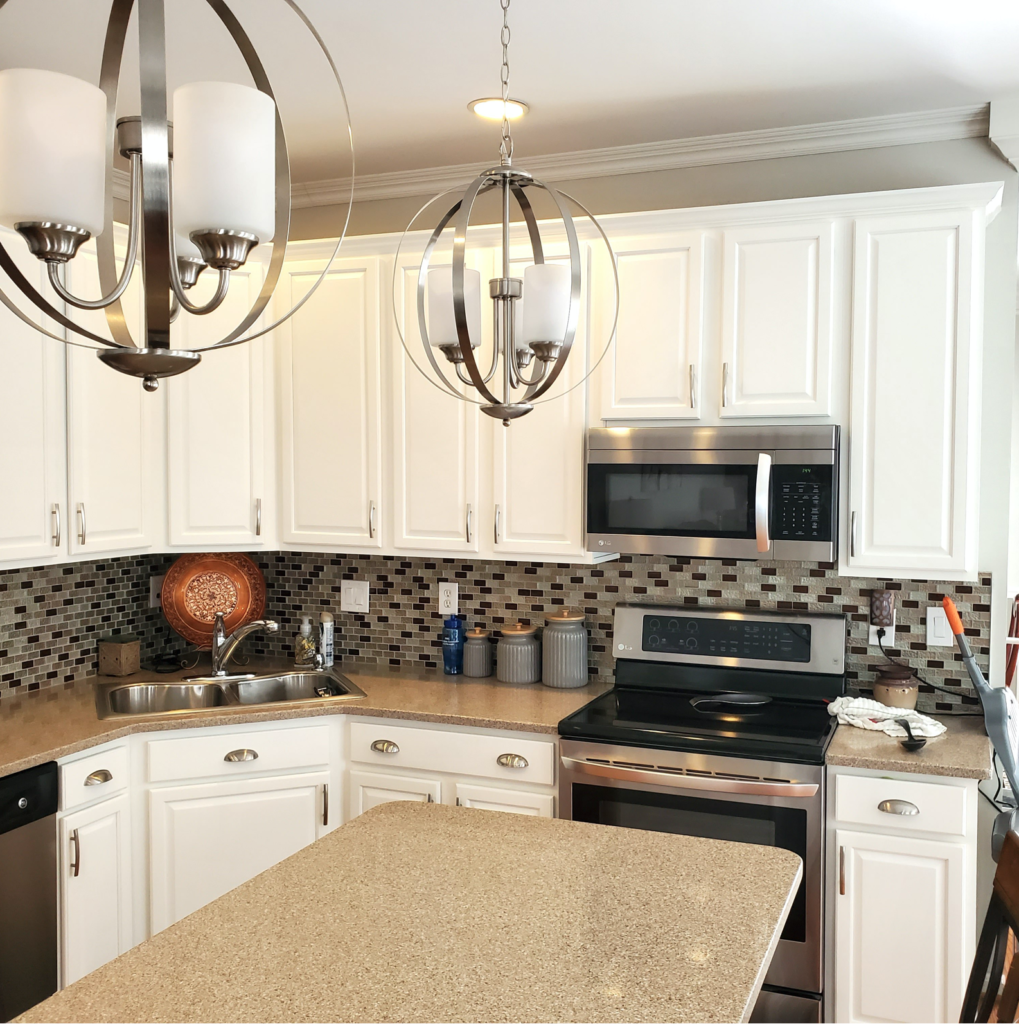
One of our kitchens in "White Dove"
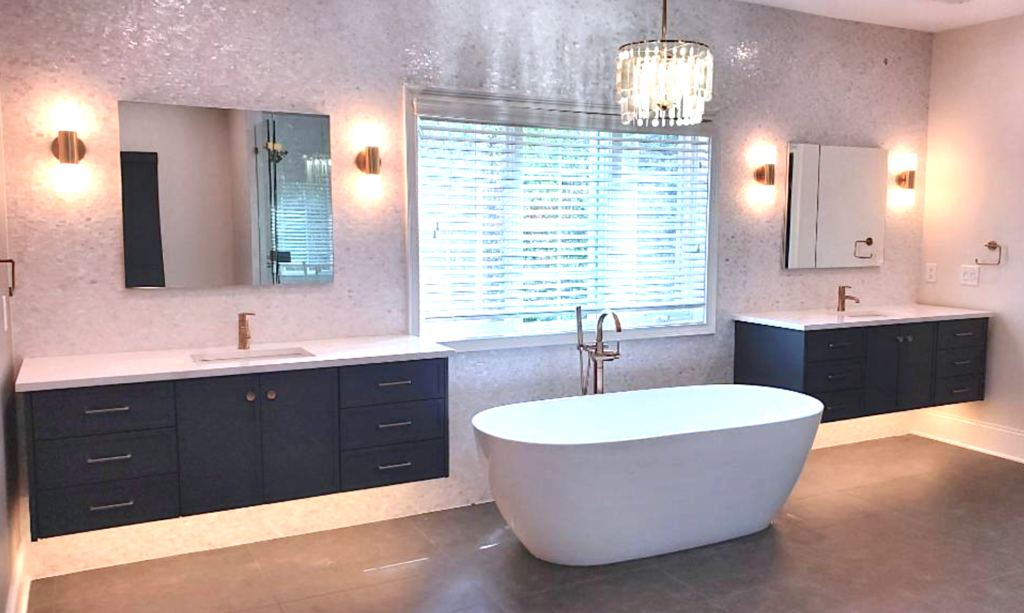
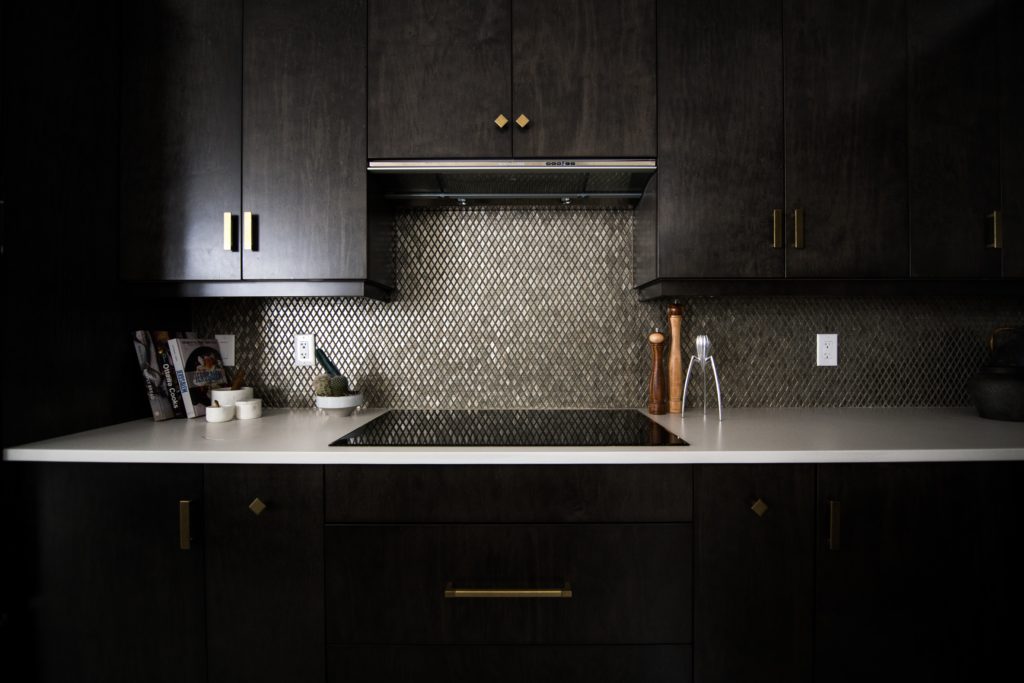
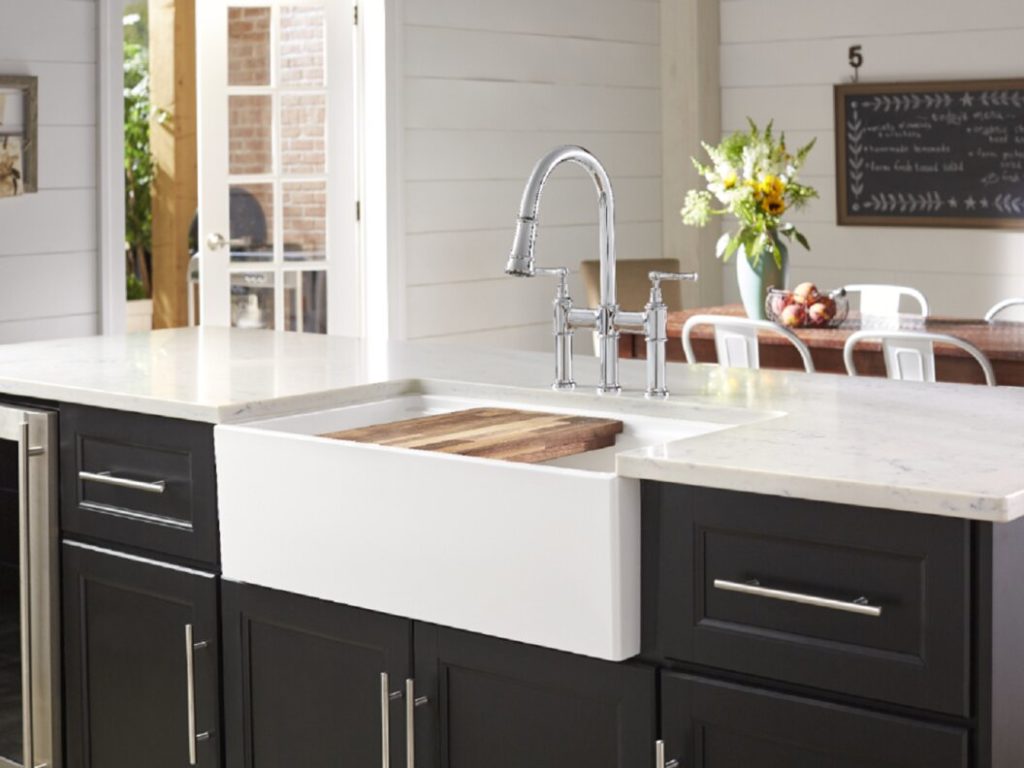
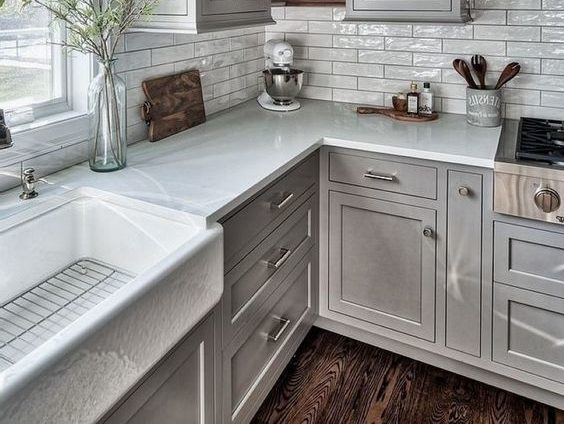
Color Inspiration
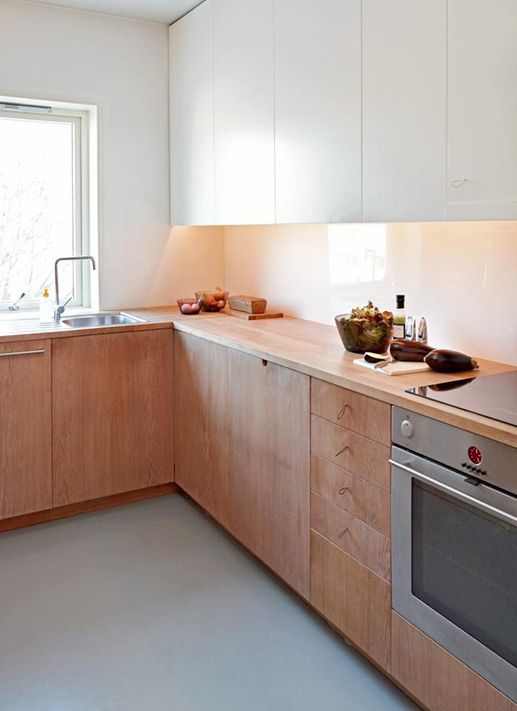
Modern: Light with splash of color
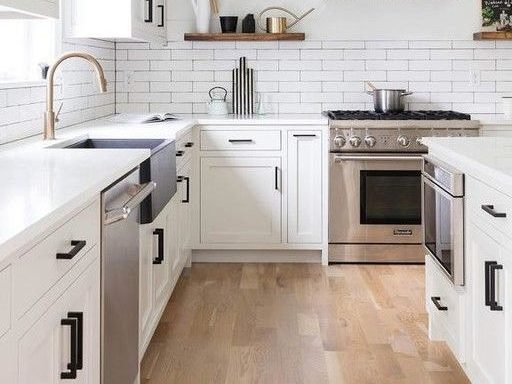
Modern Farmhouse in white
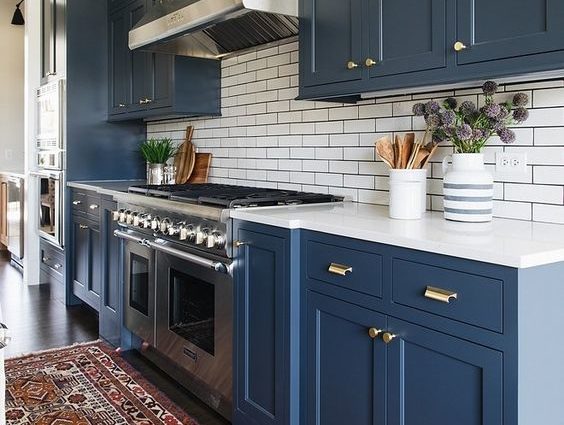
Navy tones
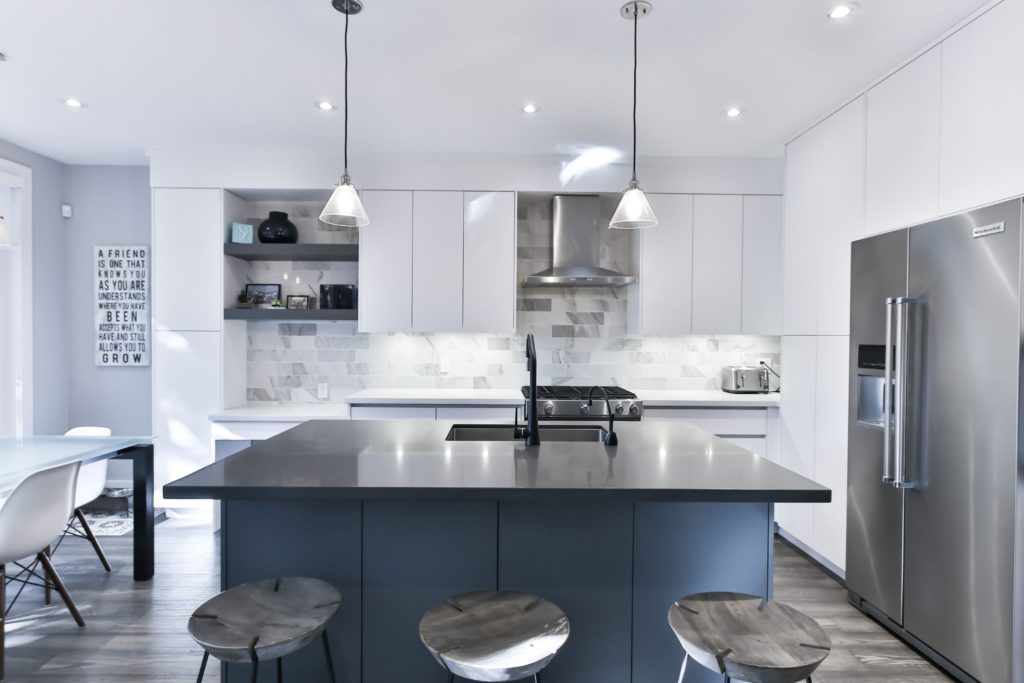
Modern: Warm and Sleek
Modern Farmhouse in black
Light grey tones
Have the perfect color in mind, but not sure how to identify it?
Not to worry.
Sherwin-Williams ColorSnap can help match a color from a photo, an existing paint color, or another inspiration source. Therefore, if you already have a color in mind but do not know the exact name, this tool can be a helpful starting point.